NIST and Argonne researchers stir molten metal with looping lasers inside 3D printers
By moving a printer's laser in loops rather than straight lines, NIST researchers mixed molten metals during laser powder bed fusion, a technique they say could let existing machines print hard-to-make high-entropy alloys.
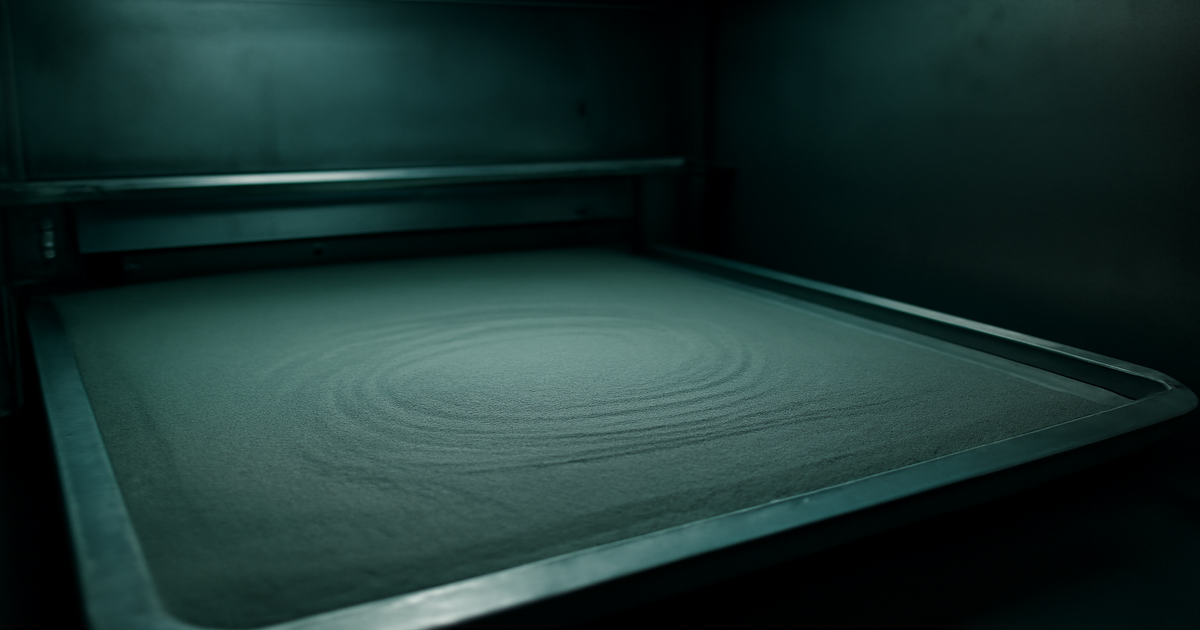
Researchers at the U.S. National Institute of Standards and Technology have developed a way to mix metals into new alloys during 3D printing by moving the laser in looping paths so that it stirs the molten pool, according to work published online on January 30, 2026, in Additive Manufacturing and reported by the agency on June 4 (DOI 10.1016/j.addma.2026.105101).
The method applies to laser powder bed fusion. Commercial 3D printer software cannot generate the looping pattern, so the team wrote its own, NIST said. Because no significant new hardware is required, existing metal 3D printers could adopt the approach through programming alone.
To test it, the researchers alternated layers of RHEA-19, a dense high-entropy alloy, with layers of a lightweight titanium alloy, then passed the looping laser across the boundary. The experiments were carried out at the Advanced Photon Source at Argonne National Laboratory near Chicago, where X-rays roughly 500 billion times brighter than those used in dental imaging allowed the team to follow changes in atomic arrangement in real time through X-ray diffraction patterns as the metal solidified. Electron microscopy was used to examine the final microstructure.
High-entropy alloys, a family developed over the past two decades or so, typically combine five metals at around 20% each and perform well at high temperatures, making them attractive for jet engines and nuclear reactors. They are difficult to produce by conventional means such as casting, NIST said, because differences in density, melting point and surface tension cause the metals to separate as they cool, weakening the result.
At present the technique makes one alloy from one powder, but NIST said mixing elemental powders inside the printer could cut costs and add flexibility, and raised the prospect of printing jet turbine blades from several metals without welding.
Ho Yeung, Jordan Weaver and Andre Ponsot are among the paper’s authors, along with Junaid Dar, Yisong Zhang, Dong Lin, Andrew Chuang, Michael C. Gao and Fan Zhang.