How Korea's ondol floor heating shaped the way people sit, sleep and build homes
Korea's ondol, a centuries-old system of heating homes through the floor, still shapes everyday habits, modern apartment design and the way the country thinks about domestic energy.
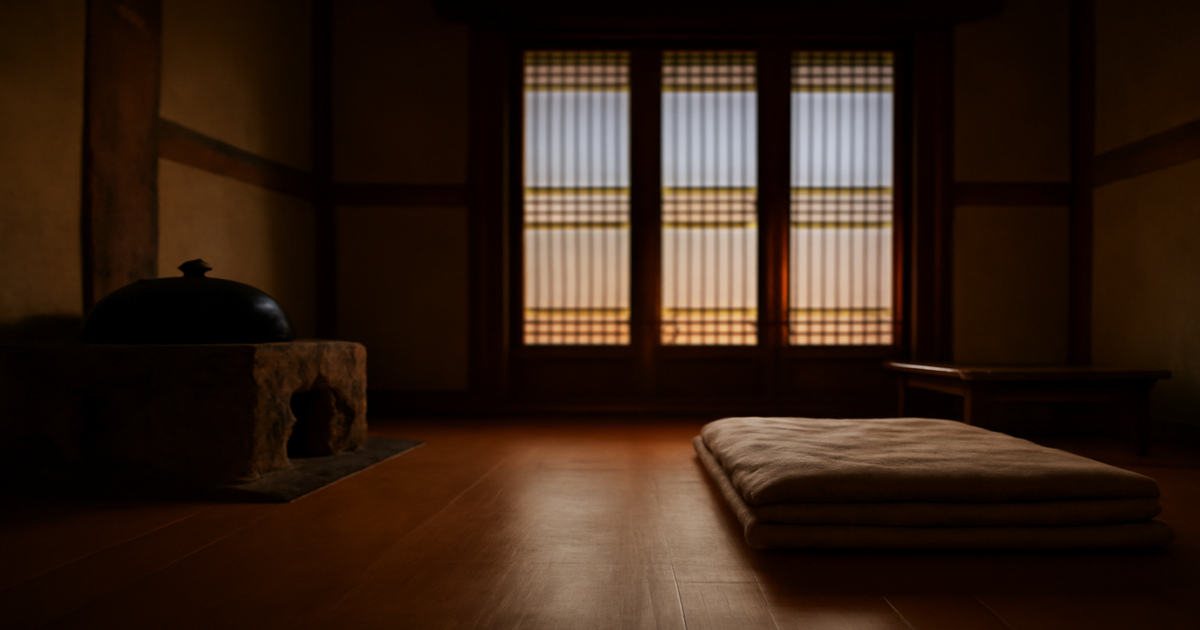
Walk into almost any Korean home and the first instruction is to take off your shoes. The custom is often explained as hygiene or etiquette, but its deeper logic lies beneath your feet. For centuries, Koreans have heated their homes from the floor up through a system called ondol, literally “warm stone.” The floor, rather than the air, has long been the center of domestic warmth, and much of Korean daily life has been arranged around that fact.
The traditional mechanism was simple. A fire lit in a hearth, often the kitchen stove used for cooking rice, sent hot smoke through a network of flues running beneath flat stone slabs. The stones, sealed with clay and covered with oiled paper, absorbed the heat and released it slowly into the room before the smoke escaped through a chimney at the far end. Archaeological evidence points to early forms on the peninsula well over a thousand years ago, and by the Joseon era the system had spread across social classes, from palaces to farmhouses. One fire could cook dinner and warm the house through the night, an efficiency that suited a land of cold winters and limited fuel.
Because the warmth lived in the floor, so did people. Koreans sat cross-legged on cushions, ate at low tables, and slept on thin padded mattresses called yo that were folded away each morning, letting a single room serve as dining room, study and bedroom. The spot closest to the fire, the araetmok, was the warmest and was customarily offered to elders and guests, embedding hierarchy and hospitality into the geography of the floor. Even the pleasure Koreans take in lying on a hot floor to ease aches, a habit visible in the popularity of jjimjilbang bathhouses, traces back to ondol.
The technology did not survive modernization unchanged. In the middle of the twentieth century, many urban households burned compressed coal briquettes, known as yeontan, beneath their floors. They were cheap but dangerous, and carbon monoxide leaking through cracked floors was a notorious cause of poisoning deaths in that era. The shift to oil and then gas boilers circulating hot water through pipes embedded in concrete removed the smoke while keeping the principle. When Korea’s apartment boom took off, builders adopted this hydronic floor heating as a default, and it became a near-universal expectation of Korean housing rather than an optional feature.
That expectation shaped apartment design in quiet ways. Floors are built as thick, heat-holding slabs; rooms tend to be finished with materials such as vinyl or engineered flooring that tolerate warmth; and radiators or forced-air vents, common elsewhere, are largely absent. Many households own beds and sofas now, yet the floor remains the heated surface, and people still often sit or sleep on it in winter. In planned new towns, district heating networks pipe hot water from central plants to whole complexes, while most other homes rely on individual gas boilers controlled from a panel on the wall.
The energy picture is mixed. Radiant floor heating can feel comfortable at lower air temperatures, since warmth rises from below and the body is in direct contact with a heated surface, and a large thermal mass smooths out temperature swings. But slabs take time to warm, encouraging households to leave heating running for long periods, and the cultural preference for a genuinely hot floor can push consumption upward. As Korea pursues lower carbon emissions, the question is less whether to abandon ondol than how to feed it, whether through heat pumps, better insulation or cleaner district heating.
Ondol’s influence has also traveled. Underfloor heating is now marketed worldwide as a modern comfort, and Korea has recognized ondol culture as part of its national heritage. What began as a way to stretch a cooking fire through a winter night became a template for how Koreans sit, sleep, build and consume energy, and it remains one of the clearest examples of a technology quietly writing the habits of a society.