Korea drew the maps for robotaxis and then waited
Autonomous driving districts have been designated across most Korean cities and a Level 3 legal framework has been in place since 2020, yet paid driverless service remains further away here than in several US and Chinese metros.
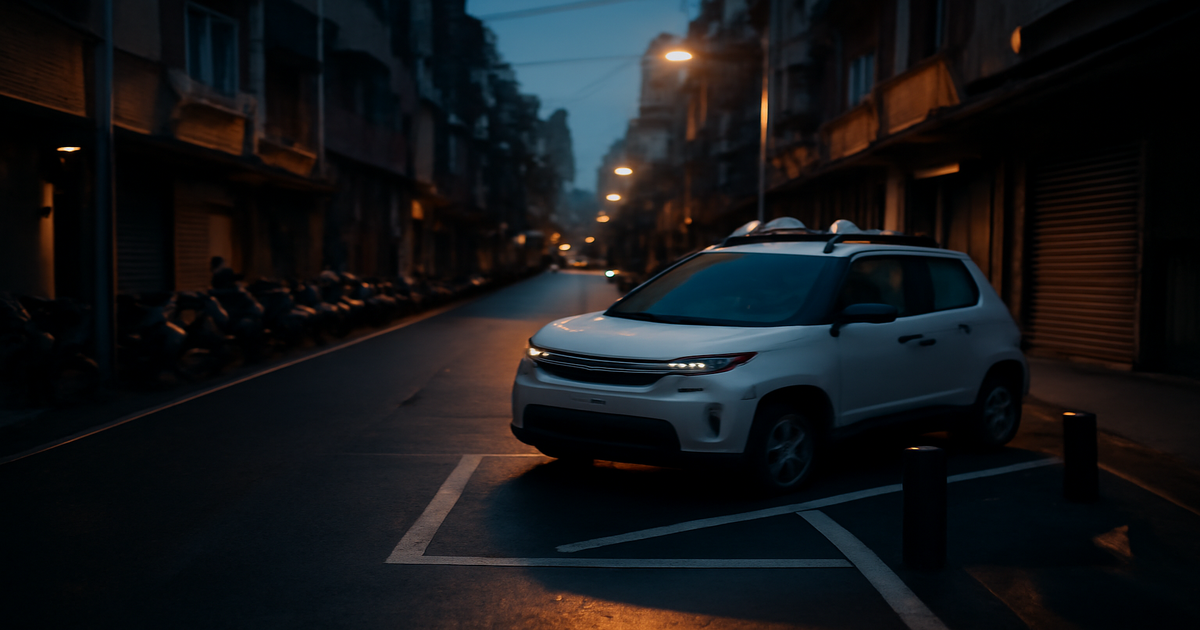
Korea legislated for autonomous vehicles early and thoroughly. The Act on Promotion of and Support for Commercialization of Autonomous Vehicles took effect in May 2020, creating a category of designated demonstration district in which operators can run services under relaxed transport-licensing rules, charge fares, and test with real passengers on public roads. Districts were designated in Seoul, Sejong, Daegu, Gwangju, Jeju and dozens of other locations, spanning every metropolitan authority, and Korea had separately issued safety standards for Level 3 conditional automation that took effect at the start of 2020 — among the first national standards anywhere to define what a system that legally drives itself under specified conditions must do.
Services followed. Seoul has run autonomous shuttle routes in Sangam since 2021, a robotaxi pilot in Gangnam since late 2022, and late-night autonomous buses on a central corridor since December 2023, with fares charged on several of them. Jeju, Sejong and other provincial cities operate their own pilots, and the domestic operator set covers the stack from perception software to retrofitted fleets. The government’s stated target has been Level 4 commercialization around 2027.
Set against that, the operating reality is modest. Korean robotaxi services run on defined route sets or within small district boundaries, with a safety operator in the vehicle, at fleet sizes measured in tens. Over the same period Waymo moved to fully driverless paid service across several American metropolitan areas at a scale of well over a hundred thousand rides a week, and Baidu’s Apollo Go expanded driverless operation in Wuhan to a fleet in the hundreds. The gap is not in the legal framework, which Korea had first, and it is not obviously in the underlying engineering talent.
Some of it is geography. Korean cities present a dense, mixed-mode street environment — scooters on footpaths, delivery motorcycles filtering, informal loading, narrow arterials with heavy jaywalking — that is genuinely harder than the wide-grid suburbs where American driverless services first became reliable. Sanitizing that environment is not an option. Some of it is the incumbent alternative: Korean taxis are cheap and plentiful, public transport is dense and heavily used, and the commercial case for removing a driver is weaker than in a market where a ride costs three times as much. And some of it is that the demonstration-district structure, while it authorises service, also bounds it. An operator scaling inside a designated polygon accumulates miles in a small area rather than across a city.
Liability is where the framework is most developed and least tested. Korea’s approach, set out through amendments to the automobile compensation statute, keeps first-line liability with the vehicle operator and their insurer so that an injured party is compensated without having to litigate the software, while preserving the insurer’s right of recourse against the manufacturer where a system defect caused the collision. Vehicles must carry an autonomous-driving data recorder, which is what makes the recourse claim adjudicable at all. The design is sensible and its practical behaviour is unknown, because the volume of serious incidents in Korean pilots has been too small to generate case law. Insurers have written specific autonomous products with limited exposure and limited data to price them on.
The result is a system that is well prepared and under-exercised, and that is a harder position to fix than being unprepared. Regulatory capacity was built in advance of deployment, which is the correct order, but the value of a framework depends on the volume of operation flowing through it, and Korea has so far generated far less operating experience than jurisdictions that legislated later. The 2027 target will not be met by further legal refinement. It requires someone running a fleet large enough, over a wide enough area, for long enough that the liability rules acquire content and the perception systems see the Korean street in the quantities they need.