How Korea turned its public toilets into a point of national pride
Korea's public restrooms went from a national embarrassment to an amenity travelers remark on, the result of a decades-long state campaign that shows how infrastructure spending, mega-event deadlines and slow norm change interact.
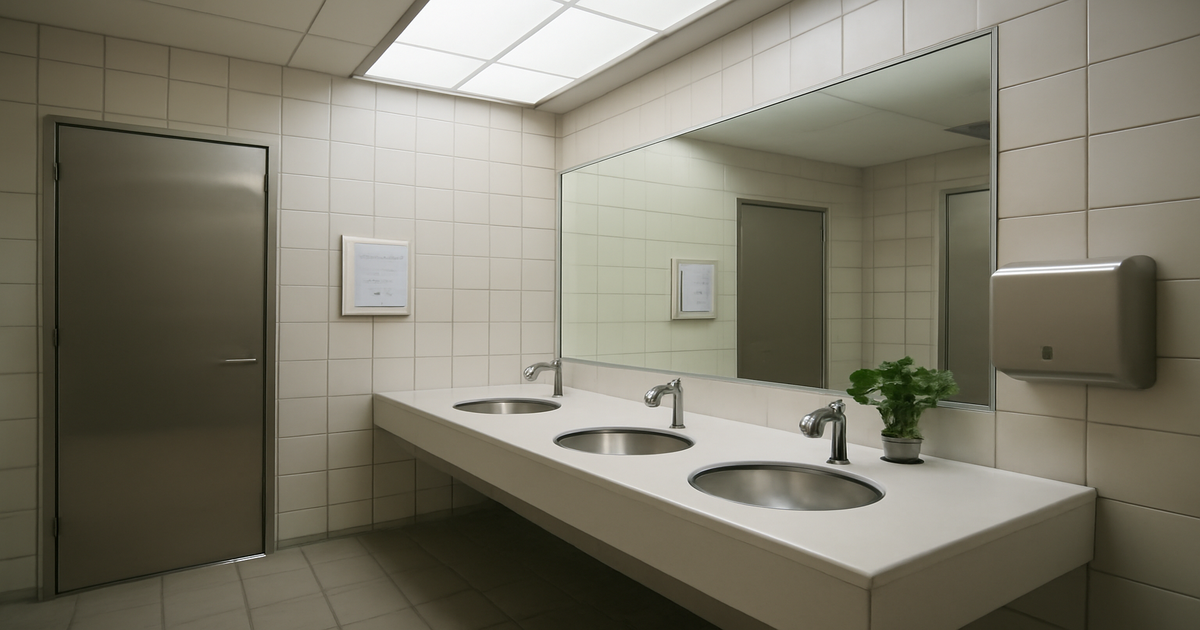
Walk into a subway station restroom in Seoul and several things are true at once: it is free, it is inside the fare gates, it stocks paper, and someone has signed a laminated card on the wall to certify when it was last cleaned. Visitors from wealthier countries often remark on this, sometimes with a note of confusion, because public sanitation is one of the few domains where Korea plainly outperforms much of Western Europe and North America. That outcome was not incidental. It is the residue of roughly three decades of deliberate government campaigning, and the campaign’s history is a useful case study in how a state changes not just pipes but habits.
The starting point was low. Within living memory, much of urban Korea relied on pit latrines emptied by collectors, and flush toilets connected to modern sewerage were a marker of class and neighborhood. Public facilities, where they existed, were often unlit, unplumbed and unattended. The 1988 Seoul Olympics produced the first concentrated push — a familiar pattern in Korean development, where an international audience functions as a domestic deadline — but the effort was concentrated along a few corridors and venues rather than distributed across the country. Sewer coverage, which expanded steadily through the 1990s, did more of the quiet structural work than any single campaign.
The decisive moment came with the 2002 World Cup, hosted in ten cities, which spread the obligation far beyond the capital. Local governments were pushed to renovate facilities near stadiums, transit hubs and tourist sites, and the campaign acquired an unusual civic flavor: beautiful-toilet contests, design awards, restrooms built with skylights and planters and piped music. Suwon became the movement’s symbolic home through Sim Jae-duck, the mayor and later lawmaker known as Mr. Toilet, who helped found the Korea Toilet Association and eventually built himself a toilet-shaped house. In the mid-2000s the National Assembly gave the effort a legal spine with a dedicated statute on public toilets, imposing standards on fixture ratios, cleaning frequency and management responsibility rather than leaving quality to municipal discretion.
The mechanisms were mundane and therefore effective. Facilities were assigned to named managers and rated. Highway rest stops, run under a public corporation, became showcases where cleanliness was a competitive metric. Large private buildings, gas stations and restaurants were nudged or required to open facilities to passers-by, which is why a Korean city offers far more usable restrooms per block than its population density alone would predict. Supplying paper inside stalls, rather than at a central dispenser or not at all, was a small decision with outsized effects on how the space is perceived and treated.
Norms, though, moved slower than fixtures. For years the standing instruction was to place used paper in a bin beside the bowl, a rational response to narrow drainpipes and weak flush pressure in older buildings. Government guidance later reversed this, encouraging flushing and the removal of the bins, and the transition has been uneven — signage in one building contradicts signage next door, and older users often keep the habit regardless of what the sign says. It is a good reminder that infrastructure campaigns produce behavior with a lag measured in generations, not budget cycles.
Success also relocated the anxiety. With cleanliness largely solved, the salient worry in Korean public restrooms became surveillance: the spy-camera problem prompted municipal inspection teams with detection equipment, sealed screw holes, and emergency call buttons installed in stalls. The dominant complaint shifted from disgust to fear, and disproportionately for women. That shift, more than any award-winning restroom, marks how far the baseline moved — along with what remains unfinished, including aging facilities in smaller towns, patchy accessibility for wheelchair users, and the low-paid, largely older workforce whose daily labor the laminated cards on the wall quietly document.