Koreans got their evenings back and built an economy around them
As working hours fell from among the world's longest, a discretionary evening appeared in Korean life and a market for hobbies, courts and climbing walls grew to meet it.
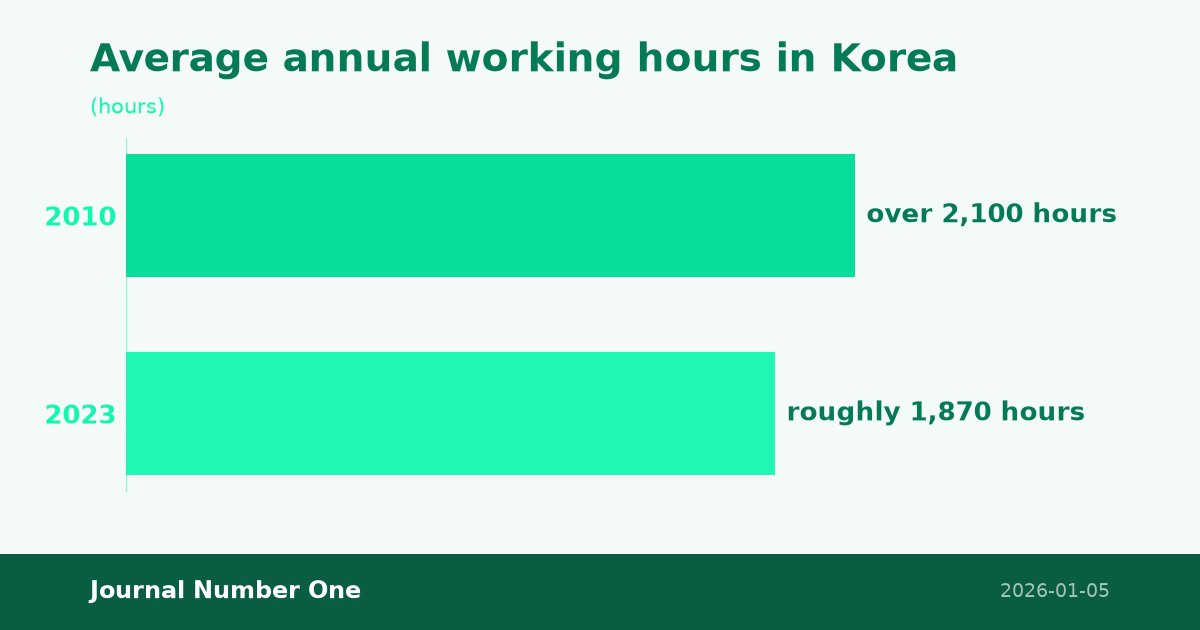
For most of the postwar period the Korean evening belonged to the employer. The formal end of the workday was a suggestion, and what often followed it — the hoesik, the after-hours drinking round that functioned as an unpaid extension of the office — was attended as a duty rather than chosen as a pleasure. The statistics were correspondingly severe. In 2010 the average Korean worker logged well over 2,100 hours a year, several hundred more than the OECD average and enough to place the country second only to Mexico among member states. By 2023 the figure had fallen to roughly 1,870 hours. Korea still works longer than most rich countries, but it is no longer an outlier of the old kind, and the difference amounts to something like six or seven working weeks a year returned to the individual.
What arrived with those hours was not simply rest. Surveys of corporate culture conducted through the early 2020s recorded a steady decline in the frequency and duration of the compulsory hoesik, with employers increasingly describing a single round ending before ten o’clock as the new norm. Younger employees, in particular, treated the reclaimed evening as time to be programmed rather than recovered. The Korean phrase that captured the shift, worabael — a local compression of work-life balance — moved within a few years from aspirational slogan to a category on job listings.
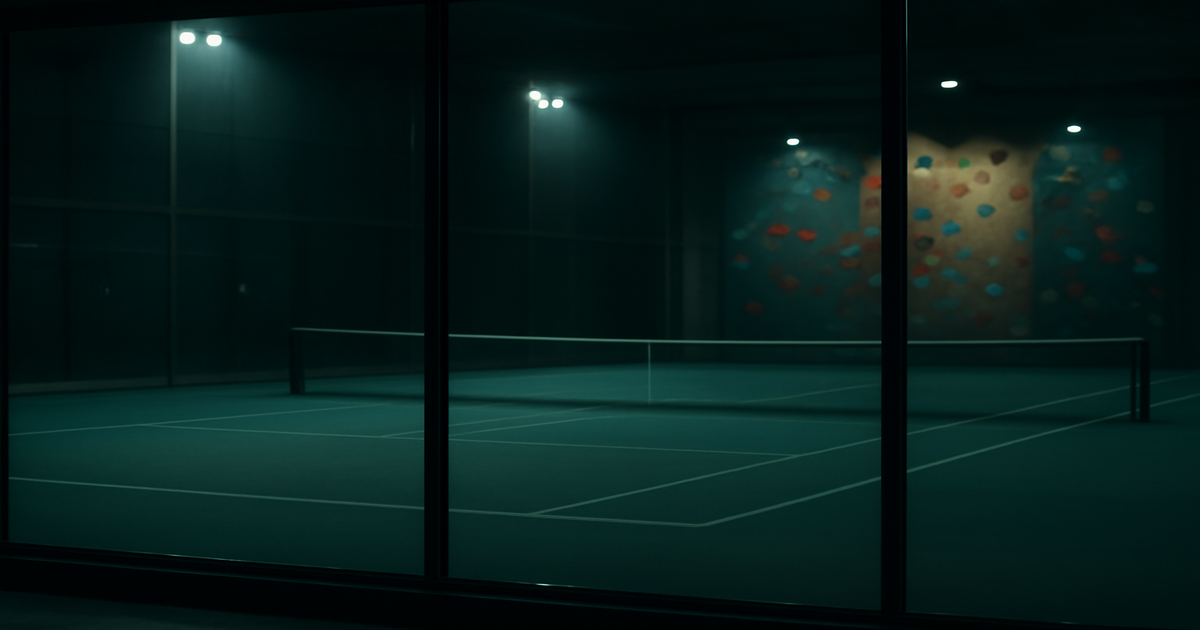
The clearest evidence is athletic. Tennis, a sport that had spent decades as a provincial minority pursuit, became a metropolitan boom: indoor courts multiplied in Seoul’s commercial districts, and booking a public court in the capital at a reasonable hour turned into a competitive exercise conducted through smartphone apps at midnight. Indoor climbing followed a similar arc, with bouldering gyms opening in the retail spaces that karaoke rooms and PC cafés had once occupied. Golf, historically the pastime of the corporate host, was democratised in a strange way by the pandemic, when overseas travel closed and screen-golf franchises absorbed the demand; the golf apparel market expanded sharply through 2021 and 2022 before cooling once foreign trips resumed. Government surveys of everyday sports participation have tracked the aggregate effect, with regular participation rates rising through the 2010s and settling around three in five adults.
A service industry assembled itself around the same demand. Platforms selling short-form leisure — the wondei keullaeseu, or one-day class, in which a stranger teaches pottery, cocktail-making, leather craft or film photography for an evening — turned hobbies into discrete purchasable units. Operators including Frip, Taling and Class101 built marketplaces on the premise that a Korean adult would rather buy a curated three-hour experience than commit to a term-length course, and the format suited a population that increasingly lives alone. That is not incidental: single-person households passed a third of all Korean households in the early 2020s, and a market designed for solitary participation who need not recruit a friend to join them was well matched to the demographic fact.
The distribution of this new leisure is uneven, and the unevenness is the honest caveat. Reduced hours arrived first and most completely at large firms and public institutions with the administrative capacity to enforce them. Employees of small subcontractors, the self-employed running the country’s dense field of small shops, and platform couriers paid by the delivery have seen far less of the change; for many of them the evening remains the most productive part of the working day. The hobby economy is accordingly concentrated among salaried workers in the metropolitan area, which is also where the courts and climbing walls are.
Still, the direction is not in doubt. A country that organised itself for four decades around the proposition that time belonged to production has spent the past several years discovering what its citizens do when some of it is given back. The answer, so far, is that they book a court, take a class and pay for it.